
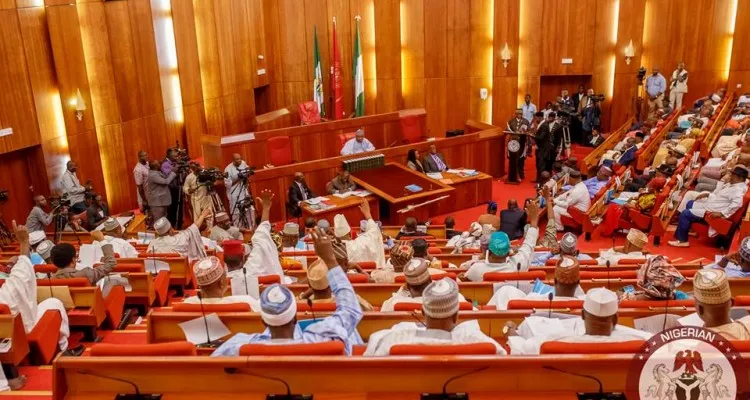
Nigeria’s parliament has suspended official visits and legislative engagements with South Africa over continuing violence against migrants, including Nigerians living in the country.
The decision follows growing concerns over attacks on Nigerians and other African nationals amid renewed anti-migrant protests in South Africa.
The parliamentary directive suspends official visits to South Africa and participation in legislative engagements involving the country. The suspension also extends to virtual engagements.
The move comes amid rising diplomatic concerns over the safety of Nigerians in South Africa. Nigeria’s Foreign Ministry said on Saturday that two Nigerian nationals had recently been killed in separate incidents in the country.
One of the victims, James Uchechukwu Nwankwo, was killed in Cape Town on September 5 after what Nigeria’s Foreign Ministry described as “gruesome interrogation techniques” by South African police officers. Another Nigerian, Bishop Taiwo Michael Fakunle, was killed at his home in Johannesburg on September 4.
The circumstances surrounding Fakunle’s death and the identity of those responsible had not been established at the time of reporting.
Nigeria’s Foreign Ministry condemned the killings and expressed concern over the safety of Nigerians and other foreigners in South Africa.
The latest parliamentary action adds to growing tensions between Nigeria and South Africa over the treatment of Nigerian nationals.
According to Reuters, at least 98 Nigerians have reportedly died in mob, hate-related and extrajudicial attacks in South Africa since 2022. Nigerian authorities have also facilitated the voluntary evacuation of Nigerians from the country amid the worsening situation.
The Nigerian and South African governments have previously engaged diplomatically over xenophobia and the safety of foreign nationals. South African officials have condemned xenophobic violence, while Nigeria has repeatedly called for stronger protection of its citizens.
The parliamentary suspension is intended to signal Nigeria’s opposition to the attacks while placing renewed pressure on South African authorities to protect Nigerians and other African migrants.
Source: Reuters, Associated Press